


Kenya Education Project continues to help communities
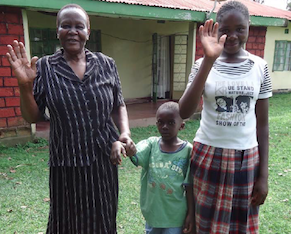
Selina Nabalayo Jakait, 74, has been a widow for 25 years now. When her husband died, only three of their 11 children had completed their schooling. She was working as a nurse but resigned to try to earn more income and provide more for her children through farming. Selina is a humble and jovial women who hails from the village of Kolanya but who is also very serious when it comes to being a good parent. Her well‐kept home is surrounded with trees and flowers, and she is considered a role model in the area. “Mama Selina is an asset where both young and old couples run to for advice and ideas on parenting,” said the village chief.
As Selina tells it, young parents need all the help they can get because many don’t know how to be parents. “In the past, parents used to be strict on their children, and this helped instill discipline on them,” she said. “Children could not be allowed to loiter. Parents used to insist on their children working very hard in class by giving them less pocket money and setting standards on their performance.”
This changed over time, she said. “The major problem in parenting in our area today is irresponsibility among parents that has been caused by their early indulgence in the illicit brew ‘chang’aa.’ This habit has always been transferred to our children, leading to high rates of school drop out and early marriages. Many parents sell their land and use the money to buy alcohol and end up being squatters.”
To help counter this, World Vision created a skillful parenting project in which the best traditional cultural and modern parenting methods in a particular area would be compiled and provided to parents. Selina and other role model parents received training to help them pass along good parenting skills and values to their communities. More than 5,000 parents attended the initial awareness meetings and received brochures that provided information on good parenting.
Since the training, Selina has been collaborating with the chief through area advisory councils to educate parents on bringing up their children. “I have been teaching other parents on good nutrition and general child upbringing at various stages,” she said. “As a result of this, I have noted improvement in discipline among children, and some parents who used not to take their children to school are currently doing so. Our chief and his assistant through child‐rights forums also continue to educate parents on their role in parenting. I believe that our children’s well‐being will even improve more.”
Thank you all for supporting World Vision and the Kenya-Child Education Project!
This donation:
| Mar 13 |
Shannon view profile
 Shannon
gave 25 for a $25 donation to The Kenya Child Protection and Education Project
Shannon
gave 25 for a $25 donation to The Kenya Child Protection and Education Project |
| Feb 3 |
David view profile
David
gave 25 for a $25 donation to The Kenya Child Protection and Education Project |
| Jan 20 |
Ryan view profile
Ryan
gave 25 for a $25 donation to The Kenya Child Protection and Education Project |
| Oct 11 |
Daryl view profile
Daryl
gave 100 for a $100 donation to The Kenya Child Protection and Education Project |
| Jul 12 |
Microsoft
gave 225 for Help support vulnerable girls in Kenya |
| Mar 26 |
Lynn view profile
Lynn
gave 25 for Help support vulnerable girls in Kenya |
| Mar 21 |
Rebecca view profile
Rebecca
gave 25 for Help support vulnerable girls in Kenya |
| Dec 18 |
Gail view profile
 Gail
gave 25 for Help support vulnerable girls in Kenya
Gail
gave 25 for Help support vulnerable girls in Kenya |
Kenya Child Protection Program Update
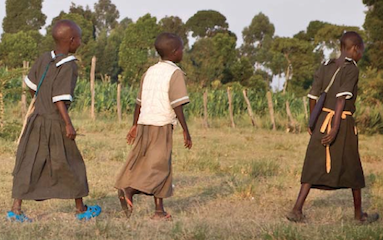
The goal of the Program is to transform communities so they are able to prevent, identify, and respond to cases of female genital mutilation, early marriage, child labor, and other forms of abuse and neglect, while increasing access of vulnerable children to safe, protective education opportunities.
Since the program began on June 1, 2012, World Vision has worked tirelessly in partnership with local communities to create a better life for the 17,000 children of the region. This has led to substantive progress towards each of the three initial objectives:
- Prevent harm
- Protect and restore vulnerable children
- Increase educational opportunities for all children
Prevention – Activities during fiscal 2012 ranged from children being trained as peer educators so they can tell other youth about the dangers of HIV and drugs, to police and local leaders visiting a children’s court, police station, and hospital to learn about resources available to help abused children.
Protection – Law enforcement officers were taught how to handle cases of abuse
in respectful, caring ways that do not bring further trauma to the child victims. Police stations established child help desks, which create welcoming, child- friendly zones for children and their parents who are coming to report sensitive and serious crimes. And communities learned the important role they play in policing abuse in their own villages.
Restoration – Activities included providing school fees so youth could return to the classroom and also supporting vocational training for children out of school.
Now what does this mean on the local level? It means real change!
A Community Empowered Against Abuse
When members of a community met to talk about the importance of their role in policing child abuse, they soon had a chance to put the lessons into action. Residents joined with the police department and the district children’s office to assist a 7-year-old girl and her family. The girl reportedly was abused by a friend of her father. The suspect was arrested and has been arraigned. Investigations are ongoing. The girl and her family are being supported to ensure they have access to care, counseling, and the legal system. Program staff said the community is working to provide a safe environment for children and has now adopted community policing as a strategy against child abuse.
Thank you so much for supporting World Vision — the Child Protection Project is transforming the lives of children and the communities in North Rift. Your love and gifts are impacting the lives of the children positively.
Once more, thank you for your generous support and may God bless you.